GE HealthCare partnered with AtlasFX to transform its FX operations after spinning off from General Electric, reducing trade notional by $8–10 billion annually, deploying AI-powered forecasting and winning the 2024 Silver Alexander Hamilton Award in Financial Risk Management.
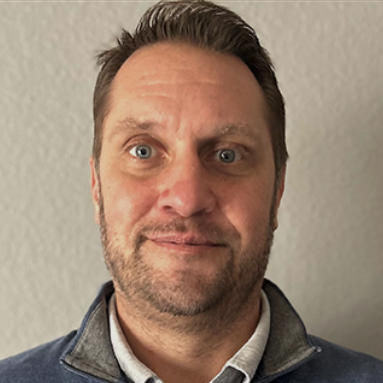
“We had a very grossed up set of derivatives, which we needed to resolve as we stood up our new treasury function.”
| Company | GE HealthCare (GEHC) |
| Industry | Medical technology: MRI, CT, ultrasound, contrast media |
| Headquarters | Chicago, Illinois, USA |
| Global presence | 160 countries; material FX exposure across 40 currencies |
| Hedge portfolio | $16 billion at time of spinoff |
| AtlasFX solution | Many-to-one FX aggregation, balance sheet & P&L hedging, AI forecasting |
| Implementation partners | AtlasFX and PwC |
| Recognition |
2024 Silver Alexander Hamilton Award — Financial Risk Management 2024 Gold Alexander Hamilton Award — Treasury Transformation |
This case study is based on a conversation with Andrew Walecka, treasury operations manager at GE HealthCare, whose team built the company’s FX risk management program from the ground up after GE HealthCare’s 2021 spinoff from General Electric.
He discusses how that program came together, why GE HealthCare selected AtlasFX, and how AI forecasting has sharpened the team’s hedging decisions since.
“We had a very grossed up set of derivatives, which we needed to resolve as we stood up our new treasury function.”
— Andrew Walecka, Treasury Operations Manager, GE HealthCare
Company background: who is GE HealthCare?
Can you describe GE HealthCare and your role?
“GE HealthCare manufactures MRI and CT scan machines, ultrasound equipment, and contrast media, dyes that patients ingest to help doctors understand what is happening inside their bodies.
We sell to hospitals, clinics, universities and research facilities around the world. We serve the entire spectrum of the medical industry, doing business in 160 countries, with material FX exposure across 40 currencies. I am a treasury operations manager with responsibility for FX risk management.”
How did GE HealthCare come to build its own treasury function?
“When General Electric announced in 2021 that it would be separating into three independent companies—GE HealthCare, GE Aviation, and GE Vernova—each needed to stand up its own treasury function from scratch.
Historically, core treasury activities had been centralized within GE corporate. GEHC inherited significant FX complexity: a $16 billion hedge portfolio at the time of the spinoff, spanning two distinct types of exposure.
We had less than a year to build out the entire treasury and currency risk management infrastructure to support an $18+ billion public company.”
The challenge: untangling FX risk after the GE spinoff
What were the two primary legs of FX risk you needed to manage?
“The first is our long-term P&L exposure. Depending on where we sell goods and where we manufacture them, we carry net earnings risk based on our currency profile until we recognize revenue and expenses. We hedge that risk over a period ranging from three months to six quarters.
The second leg is our balance sheet hedging program. In almost every country, we have legal entities with remeasurement risk. Prior to this project, we hedged all those risks one-to-one, going to Wall Street with a large number of external trades, many of which were offsetting each other at the consolidated level.”
What was wrong with the one-to-one approach?
“It created a highly grossed-up set of derivatives that was inefficient in every sense. We might have dollar entities going to the Street with their euro exposures and, simultaneously, euro entities going to the Street with dollar exposures. The net company position might be small, but we were paying bid-ask spread on both sides.
Reducing our derivative notional was a priority for our treasurer, so we needed to redesign the entire hedging architecture before we could operate effectively as an independent company.”
What technology constraints were you starting with?
“Mother GE had a variety of exposure management tools—many custom and homegrown—that had built up over decades. We couldn’t take those tools with us, and we weren’t going to have the IT infrastructure to support an array of highly customized solutions. So we were starting from a clean sheet at exactly the moment when the complexity of the business demanded sophisticated technology. We had to define our requirements, evaluate vendors and implement a new system all within less than a year.”
Selecting AtlasFX: a structured vendor evaluation
How did you approach the vendor selection?
“We ran a structured process: workshops with key stakeholders to define detailed requirements, followed by vendor demos assessed against a predefined scorecard. The process was rigorous because we knew we only had one chance to get this right.
In the end, we selected AtlasFX and engaged PwC as our implementation partner. What distinguished AtlasFX was their ability to handle the depth of customization our legal entity structure required, and their understanding of the FX risk management challenges specific to a business like ours.”
Why was customization so important?
“The healthcare business is tightly regulated in most places, which means we require distinct legal entities in nearly every country where we do business. Our corporate structure is a large web of group companies in 160 countries selling to distributors worldwide, with FX risk falling out at varying points.
We needed to replicate our complex legal entity matrix in AtlasFX, forecast against it, consolidate information at the top of the house and still isolate relevant flows to choose which ones to hedge. That is not a standard out-of-the-box capability.”
Implementation: building the many-to-one hedging architecture
What was the most challenging aspect of the deployment?
“Incorporating the legal entity matrix into AtlasFX. We had to define internal settlement timing for all our different exposures. We have very unique rhythms for internal settlement between legal entities, and the timing of internal hedges determines the rates used for those transactions.
The sheer number of entities in our matrix, combined with the need for many-to-one aggregation and the requirement to perform specific settlement actions during finite time periods, meant we required significant customization to the AtlasFX platform.”
How did you test the system before going live?
“We did an extensive period of penny tests, small trades designed to probe every possible scenario. Early closeout of a trade. Changing the amount mid-stream. Shifting maturity dates. Every type of trade, trade action, and legal entity jurisdiction.
When you are designing a system, even if you think you have captured every possible scenario, you have not. It sometimes felt like we were running through infinite scenarios, but that rigor was essential to building confidence in the platform before we went live with real trades.”
“I vastly underestimated how much work this project would be.”
— Andrew Walecka
What role did cross-functional collaboration play?
“It was essential. Years ago, GE HealthCare treasury would determine hedges in spreadsheets, enter them into the GE system and effectively throw the result over a fence. The Dublin trading team would do their thing and GE accounting would do theirs.
Now, as an independent company, everyone involved is on the same team. Sitting together in the same room and working through considerations was genuinely beneficial. We put real effort into understanding what was important to each function. Getting out of your silo is critical in a project like this.”
Related reading: Building Takeda’s global, systemized FX hedging program from scratch
How AtlasFX works for GE HealthCare today
How does data flow through AtlasFX?
“AtlasFX ingests financial data, including historical data, from both of our ERP systems, and pulls in outstanding derivatives from our accounting system.
My team then adds forecasted transactions. GEHC forecasts our revenue and cost profile at the macro level; we isolate the main entities with material FX risk and plug that macro forecast into our legal entity matrix before loading it into AtlasFX.
Hedge accounting does not allow us to simply hedge at the top of the house; we have to specify the legal entities with the associated risk profile before placing hedges.”
How does AtlasFX support the hedging decision?
“Once the data is loaded, AtlasFX develops an actionable forecast of FX risk, calculates each operating entity’s net exposure and produces a hedging recommendation.
For balance sheet hedges, we generally initiate a derivative in the suggested amount. For P&L hedges, the process is more subjective. We take a layered approach: in the current quarter we hedge a high percentage, but that drops off in subsequent quarters.
When we receive P&L hedging recommendations, we discuss them as a team, considering market factors, the carry we can earn on forward hedges, and our confidence in the forecast, and then determine how to build coverage over specific upcoming quarters.”
What is the trade execution workflow?
“Our analysts enter the trades in AtlasFX, I review and approve them, and trades above a certain dollar amount or of a longer duration require a second approval. Approved trades are transferred into 360T, and our traders in Dublin execute them. The entire workflow—from exposure aggregation through hedge recommendation, approval, and execution—runs through AtlasFX.”
Can you describe the custom reporting you built?
“Within our legal entity matrix, we have a labyrinth of cross-exposures, many of which net out. Some of the reports we developed translate all exposures to USD and consolidate them so we know our overall exposure.
For example, we have a large manufacturing entity in Norway that sells into Europe. Those relationships create NOK-EUR and EUR-NOK exposures. It would not make sense—or, as I put it, it would be utter madness—to hedge those against each other on a currency-pair basis. The reporting rolls all exposures up to a consolidated netted USD basis.
We then go to the Street with a finite number of trades and carve them out internally so that each legal entity receives its own internal hedge, enabling entities to mitigate their risk without taking steps that are counterproductive for GEHC on a consolidated basis.”
How does the tax team factor into this?
“We work closely with our tax team to ensure that rates on internal transactions are reasonable. Transfer pricing authorities tend to scrutinize internal transactions carefully. If FX made an entity’s profit percentages too high, there would be tax consequences in certain jurisdictions. If profits are too low because of FX, they might accuse us of profit shifting.
Getting the internal rates right is an important but often overlooked dimension of a many-to-one hedging program.”
Related reading: The FX exposure blind spot: a treasurer’s guide to ERP deployment
AI forecasting: the next evolution in FX accuracy
With the core platform in place, what was the next challenge you tackled?
“The persistent gap between how FP&A forecasts FX and how Treasury needs to act on it. FP&A forecasts at the currency and macro level: revenue and costs by currency. But to place hedges, Treasury must work at the legal entity level: specific entity, specific currency, specific flow.
With 300+ flows across approximately 100 legal entities, translating the macro FP&A forecast into individual flow forecasts was a significant manual undertaking: time-consuming, accuracy-variable and heavily dependent on specific people.”
How did AtlasFX AI address that problem?
“AtlasFX AI uses machine learning to analyze historical patterns in each individual flow and generate forecasts 18 months forward. The model ingests a minimum of 48 months of standardized historical data per flow, incorporates GE HealthCare-specific variables including seasonality and business correlations, and updates automatically each month as new actuals arrive from the ledger.
We tested the approach rigorously before adopting it, running a back-test across 253 flows in 2024 and 383 in 2025, comparing AI forecast accuracy against our manual baselines on a mean average error basis.”
What did the results of the AI testing show?
“The results validated the approach.”
- Approximately 80% of P&L flows showed improved forecast accuracy versus the manual baseline, with per-flow variance improvements ranging from ($1.2M) worse to +$24M better.
- Balance sheet flows improved on 60% of flows, with variance improvements of ($2.3M) to +$4.3M.
- Approximately 120 hours of annual time savings in the forecasting process.
- The AI forecast for the largest flow—Intermediary EUR Internal Sales—tracked actual results far more closely than the manual baseline, directly improving confidence in setting cash flow hedge coverage levels.
Results: measurable outcomes and industry recognition
What have been the most significant measurable outcomes from the overall program?
“The many-to-one hedging architecture has reduced the notional of GEHC’s FX trades by $8 to $10 billion per year. That inherently saves effort with fewer trades to manage and saves real money in bid-ask spread. Consolidating trade settlement with our middle office has generated significant additional efficiencies.
Beyond the dollar savings, we now have meaningfully better visibility into currency risks companywide. We can isolate oddities much more quickly and analyze results, particularly exposures around balance sheet remeasurement. When something surfaces as we close the books, we can understand what is happening, rather than just seeing the number.”
“The accuracy, speed, and confidence in the exposure data we are now generating are infinitely better than with our manual, Excel-based approach. We are in a much better place, and we continue to improve.”
— Andrew Walecka
What would you say to treasury teams considering a similar transformation?
“Scope it carefully and do not underestimate the complexity. My initial reaction to the size of the PwC engagement was that it might be overkill; it was not. Fortunately, our treasurer understood the complexity better than some of us who were down in the weeds.
Also, invest in cross-functional collaboration. The shift from siloed functions throwing work over fences to a single integrated team sitting in the same room made a real difference to the quality and speed of the outcome.”
What recognition has this work received?
“GE HealthCare received the 2024 Silver Alexander Hamilton Award in Financial Risk Management from Treasury & Risk, recognizing the sophistication of the many-to-one hedging architecture and the use of AtlasFX to manage a $16 billion hedge portfolio across 160 countries.
The company also received the 2024 Gold Alexander Hamilton Award in Treasury Transformation, recognizing the full scope of the treasury build-out that followed the spinoff from General Electric.”